Mastering Article Writing: Free Tips and Tricks for Success
Article writing is a valuable skill that can help individuals convey their thoughts, ideas, and expertise to a wide audience. In this tutorial, we will provide you with a step-by-step guide on how to write effective articles, including tips and tricks to enhance your writing skills. By the end of this tutorial, you will have learned the essential elements of article writing, including research, outlining, drafting, and editing. Whether you are a beginner or an experienced writer, this guide will help you improve your article writing skills and produce high-quality content that engages and informs your readers.
Step 1: Choosing a Topic for Your Article
Choosing a topic is the first and most crucial step in article writing. It is essential to select a topic that is relevant, interesting, and engaging to your target audience. Consider what you are passionate about, what you are knowledgeable about, and what is currently trending. Brainstorm ideas, and make a list of potential topics. Narrow down your options by evaluating the feasibility of each topic and the availability of resources. For example, if you are writing for a health and wellness website, you may choose to write about the benefits of meditation or the importance of nutrition. 
Step 2: Conducting Research for Your Article
Conducting thorough research is vital to creating a well-informed and credible article. Start by identifying reliable sources, such as academic journals, government reports, and reputable websites. Take notes, organize your findings, and evaluate the credibility of your sources. Consider multiple perspectives, and be objective in your approach. Use online tools, such as Google Scholar, to access relevant studies and data. For instance, if you are writing about the impact of climate change, you may research scientific studies, government policies, and expert opinions.

Step 3: Creating an Outline for Your Article
Developing an outline is a critical step in article writing, as it helps you organize your ideas and structure your content. Start by identifying the main theme, purpose, and scope of your article. Break down your topic into smaller sections, and create a logical sequence of ideas. Determine the introduction, body, and conclusion of your article, and allocate word count to each section. Consider using headings, subheadings, and bullet points to enhance the readability of your outline. For example, if you are writing a how-to article, you may create an outline that includes steps, tips, and examples.
Step 4: Drafting Your Article
Drafting your article is where you bring your ideas to life. Start by writing a compelling introduction that grabs the attention of your readers. Use clear, concise language, and avoid jargon and technical terms unless necessary. Develop your body paragraphs, using evidence, examples, and anecdotes to support your arguments. Use transitional phrases to connect your ideas, and vary your sentence structure to maintain the interest of your readers. Consider using active voice, and avoid grammatical errors. For instance, if you are writing a persuasive article, you may use rhetorical devices, such as metaphors and allusions, to engage your audience.
Step 5: Editing and Revising Your Article
Editing and revising your article is essential to ensure that it is error-free, clear, and engaging. Start by reviewing your content, structure, and tone. Check for grammatical errors, punctuation, and spelling mistakes. Evaluate your paragraphs, and ensure that they are well-organized and logical. Consider getting feedback from peers, editors, or mentors, and be open to constructive criticism. Use online tools, such as grammar and spell checkers, to help you identify and correct errors. For example, if you are writing a formal article, you may use a more formal tone, and avoid contractions and colloquialisms.
Step 6: Optimizing Your Article for SEO
Optimizing your article for SEO is crucial to increase its visibility and reach a wider audience. Start by conducting keyword research, using tools such as Google Keyword Planner or Ahrefs. Identify relevant keywords, and incorporate them naturally into your title, meta description, headings, and body content. Use header tags, such as H1, H2, and H3, to structure your content, and optimize your images by using descriptive alt tags and file names. Consider internal and external linking, and use social media to promote your article. For instance, if you are writing about article writing tips, you may use keywords such as "article writing," "writing tips," and "content creation."
Step 7: Publishing and Promoting Your Article
Publishing and promoting your article is the final step in the article writing process. Consider submitting your article to reputable publications, websites, or blogs, and follow their submission guidelines. Use social media platforms, such as Twitter, Facebook, and LinkedIn, to share your article, and engage with your readers by responding to comments and feedback. Collaborate with other writers, and participate in online communities related to your niche. For example, if you are writing about technology, you may share your article on Reddit or Hacker News.
Frequently Asked Questions:
Q: What is the ideal length of an article?
A: The ideal length of an article depends on the purpose, audience, and format. However, most articles range from 500 to 2,000 words.
Q: How can I improve my article writing skills?
A: You can improve your article writing skills by practicing regularly, reading widely, and seeking feedback from others.
Q: What are the most important elements of article writing?
A: The most important elements of article writing include research, outlining, drafting, editing, and optimizing for SEO.
Article Writing Tips | PPT
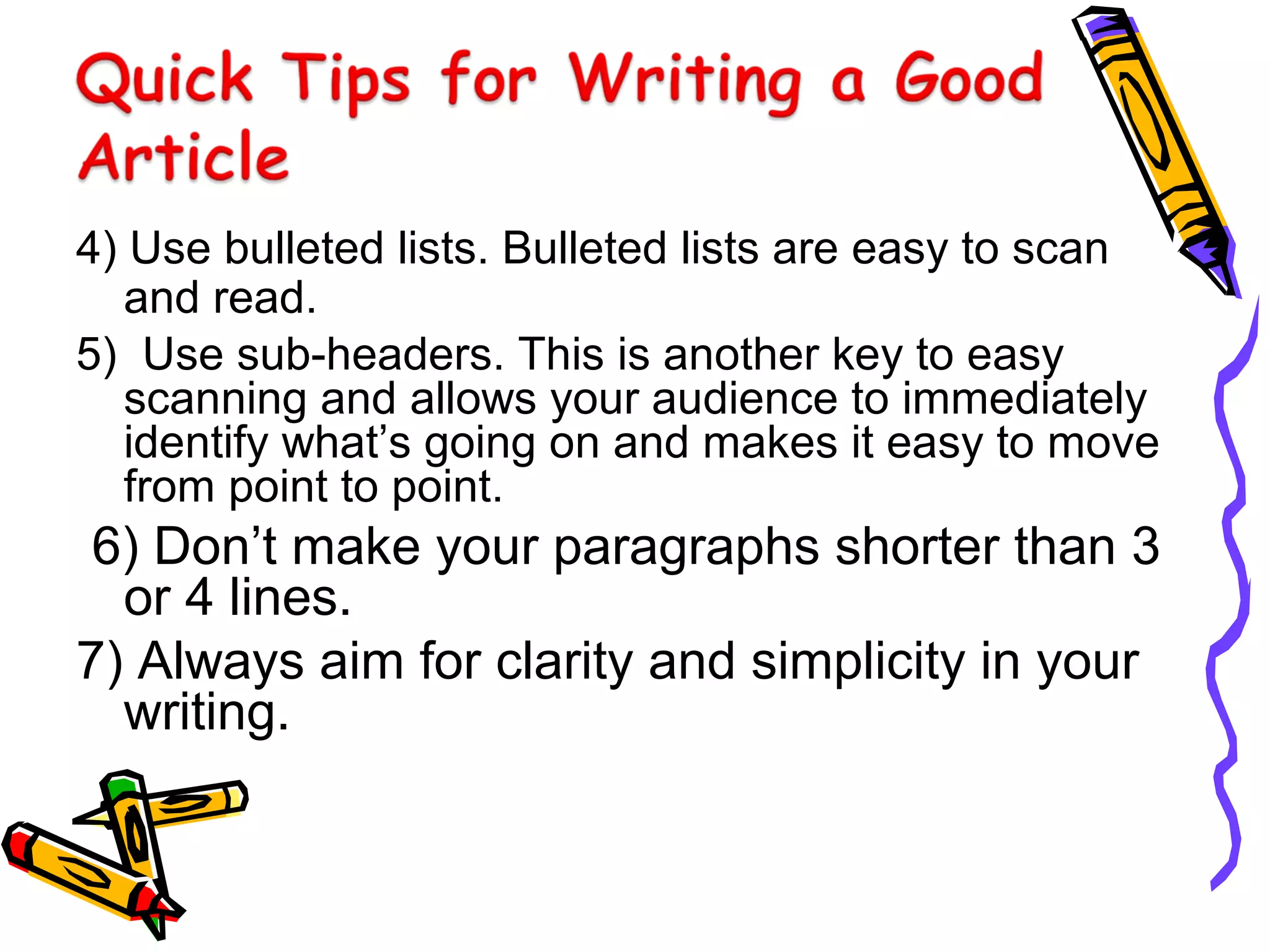
Article Writing Tips | PPT
15 Article Writing Tips For Beginners (to Earn More)

15 Article Writing Tips for Beginners (to Earn More)
Article Writing Tips | PDF | Argument | Question

Article Writing Tips | PDF | Argument | Question