Building Website Traffic with SEO: A Comprehensive Guide to Increasing Online Visibility
Are you struggling to drive traffic to your website? Search Engine Optimization (SEO) is the key to unlocking your website's full potential and increasing its online visibility. In this tutorial, you will learn the essential steps to build traffic to your website using SEO techniques. From keyword research to link building, we'll cover it all. By the end of this guide, you'll have a clear understanding of how to optimize your website for search engines and attract more visitors. So, let's get started!
Step 1: Conducting Keyword Research for SEO Success
Keyword research is the foundation of any successful SEO strategy. It involves identifying the words and phrases your target audience uses to search for content like yours. To conduct keyword research, you can use tools like Google Keyword Planner, Ahrefs, or SEMrush. Start by brainstorming a list of relevant keywords and phrases, and then analyze their search volume, competition, and cost-per-click. For example, if you're a fitness coach, your keywords might include "workout routines," "weight loss tips," and "nutrition advice." 
Step 2: Optimizing On-Page Elements for Better SEO
On-page optimization refers to the process of optimizing your website's elements to make it more search engine friendly. This includes optimizing your title tags, meta descriptions, headings, and content. Your title tag should be descriptive, attention-grabbing, and include your target keyword. Your meta description should provide a brief summary of your content and entice users to click through. Use header tags (H1, H2, H3, etc.) to structure your content and highlight important keywords. For instance, if you're writing a blog post about "SEO tips," your title tag might be "Boost Your Online Visibility with These SEO Tips" and your meta description might be "Learn how to optimize your website for search engines and drive more traffic with these expert SEO tips." 
Step 3: Creating High-Quality, SEO-Friendly Content
High-quality, engaging content is essential for attracting and retaining website visitors. Your content should be informative, entertaining, and optimized for your target keywords. Use a conversational tone and include relevant examples, anecdotes, and statistics to make your content more relatable and shareable. Optimize your content by using your target keywords strategically, but avoid keyword stuffing. Aim for a keyword density of 1-2% and use variations of your target keyword throughout your content. For example, if you're writing a blog post about "fitness motivation," you might use keywords like "workout motivation," "exercise motivation," and "weight loss motivation" throughout your content.
Step 4: Building High-Quality Backlinks for SEO
Backlinks are an essential ranking factor for search engines. They signal to search engines that your content is valuable, relevant, and worthy of citation. To build high-quality backlinks, focus on creating linkable assets like infographics, eBooks, and whitepapers. Reach out to other websites and bloggers in your niche and ask for links. You can also use guest blogging, broken link building, and resource pages to build backlinks. For instance, if you're a fashion blogger, you might create an infographic about "summer fashion trends" and reach out to other fashion bloggers to share it on their websites.
Step 5: Optimizing Your Website for Mobile and Speed
With the majority of website traffic coming from mobile devices, it's essential to optimize your website for mobile users. Ensure that your website is responsive, meaning it adapts to different screen sizes and devices. Use a mobile-friendly theme, and test your website on different devices to ensure it's working correctly. Page speed is also crucial for SEO, as slow-loading websites can negatively impact user experience and search engine rankings. Use tools like Google PageSpeed Insights to analyze your website's speed and identify areas for improvement. For example, you might optimize your images, minify your code, and leverage browser caching to improve your website's speed.
Step 6: Analyzing and Tracking Your SEO Progress
Tracking your SEO progress is essential to understanding what's working and what's not. Use tools like Google Analytics to monitor your website's traffic, engagement, and conversion rates. Track your keyword rankings, and adjust your SEO strategy accordingly. Use A/B testing to experiment with different title tags, meta descriptions, and content variations. For instance, you might test two different title tags to see which one performs better in terms of click-through rates.
Step 7: Staying Up-to-Date with the Latest SEO Trends and Best Practices
SEO is a constantly evolving field, and it's essential to stay up-to-date with the latest trends and best practices. Follow SEO blogs and websites, attend webinars and conferences, and participate in online communities to stay informed. Stay ahead of the curve by experimenting with new SEO techniques and strategies. For example, you might explore the use of artificial intelligence, voice search, and video content to enhance your SEO efforts.
Frequently Asked Questions:
Q: What is SEO, and how does it work?
A: SEO stands for Search Engine Optimization, and it's the process of optimizing your website to rank higher in search engine results pages (SERPs) for specific keywords and phrases.
Q: How long does it take to see results from SEO efforts?
A: SEO is a long-term strategy, and it can take several months to a year or more to see significant results. However, with consistent effort and optimization, you can start to see improvements in your website's traffic and rankings within a few weeks.
Q: What are the most important factors for SEO success?
A: The most important factors for SEO success include keyword research, on-page optimization, high-quality content, backlinks, mobile-friendliness, page speed, and ongoing analysis and tracking.
How To Increase Website Traffic | SEO | 50 FREE Backlink

How To Increase Website Traffic | SEO | 50 FREE Backlink
Website Traffic And SEO (+Bonus Video) - Traffic-Fans.com
Website Traffic and SEO (+Bonus Video) - Traffic-Fans.com
Drive More Visitors: SEO Strategies To Boost Website Traffic
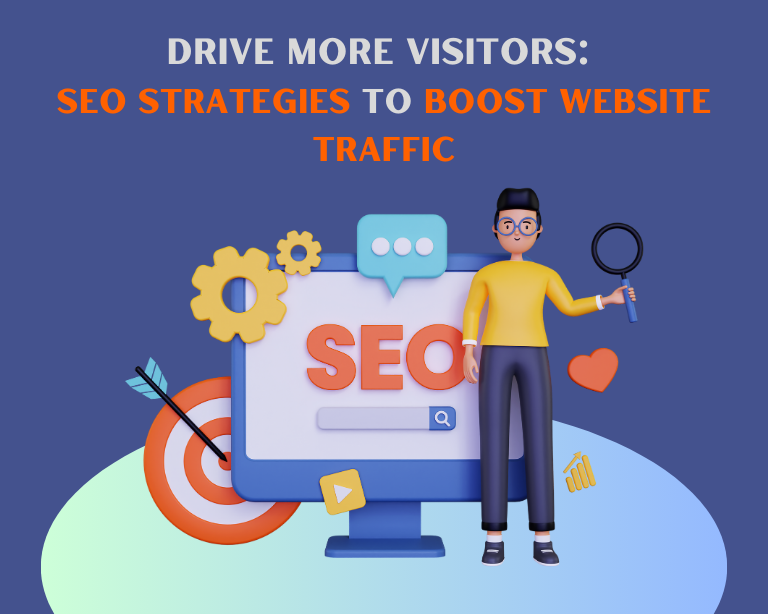
Drive More Visitors: SEO Strategies to Boost Website Traffic