Mastering Article Writing: A Comprehensive Guide to Crafting Engaging Articles
Article writing is a highly sought-after skill, and mastering it can open doors to various opportunities, from professional content creation to academic research. In this tutorial, you will learn the steps involved in writing a well-structured and engaging article. By the end of this guide, you will be equipped with the knowledge and skills necessary to craft high-quality articles that capture your audience's attention and convey your message effectively. Whether you're a beginner or an experienced writer, this comprehensive guide will walk you through the process of article writing, providing you with valuable tips, examples, and insights to enhance your writing skills.
Step 1: Choose a Compelling Topic for Your Article
Selecting a topic is the first and most crucial step in article writing. It's essential to choose a topic that resonates with your target audience and aligns with your expertise or interests. When selecting a topic, consider what's currently trending, what problems you can solve, or what questions you can answer. For instance, if you're writing for a health and wellness magazine, you might choose a topic like "The Benefits of Meditation for Mental Health" or "The Importance of Nutrition in Fitness." Remember to keep your topic specific, yet broad enough to allow for in-depth exploration. 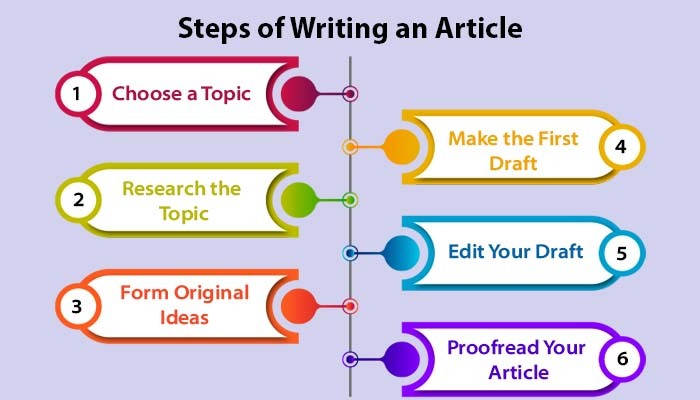
Step 2: Conduct Thorough Research for Your Article
Once you've chosen your topic, it's time to conduct research and gather information. This step is vital in article writing, as it helps you develop a deep understanding of your topic and gather credible sources to support your arguments. Start by reading books, articles, and online resources related to your topic. Take notes, organize your findings, and identify patterns or themes that emerge. You can also conduct interviews with experts or individuals who have firsthand experience with your topic. For example, if you're writing about the impact of climate change, you might interview a scientist or an environmental activist to gain valuable insights. 
Step 3: Create an Outline for Your Article
With your research complete, it's time to create an outline for your article. An outline helps you organize your thoughts, structure your content, and ensure a logical flow of ideas. Start by breaking down your topic into introduction, body, and conclusion. Then, identify key points you want to cover in each section and arrange them in a logical order. Consider using headings, subheadings, and bullet points to make your outline visually appealing and easy to follow. For instance, if you're writing an article about the benefits of regular exercise, your outline might look like this: Introduction (definition of exercise, importance of exercise), Body (physical benefits, mental benefits, social benefits), Conclusion (summary of benefits, call to action). 
Step 4: Write a Captivating Introduction for Your Article
Your introduction is the first impression readers will have of your article, so it's crucial to make it count. A captivating introduction should be engaging, informative, and concise. Start with a hook that grabs the reader's attention, such as a surprising statistic, a thought-provoking question, or a personal anecdote. Then, provide some background information on your topic, including definitions, explanations, or context. Finally, clearly state the purpose of your article and what readers can expect to learn. For example, if you're writing an article about the importance of time management, your introduction might start with a hook like "Did you know that the average person spends over 2 hours a day on social media?" followed by some background information on the benefits of time management and a clear statement of purpose.
Step 5: Develop a Well-Structured Body for Your Article
The body of your article is where you present your main arguments, provide evidence, and support your claims. A well-structured body should be logical, coherent, and easy to follow. Start by introducing your main points, using transitional phrases to connect your ideas. Then, provide evidence from your research, including statistics, expert opinions, or personal experiences. Be sure to analyze and interpret your evidence, explaining what it means and why it's relevant to your topic. Finally, summarize your main points and reiterate your thesis statement. For instance, if you're writing an article about the benefits of meditation, your body might include sections on the physical benefits (reduced stress, improved sleep), mental benefits (increased focus, enhanced mood), and social benefits (improved relationships, increased empathy). 
Step 6: Conclude Your Article with a Strong Call to Action
Your conclusion is the final impression readers will have of your article, so it's essential to make it count. A strong conclusion should summarize your main points, reiterate your thesis statement, and provide a call to action. Start by restating your thesis statement, using different words to avoid repetition. Then, summarize your main points, highlighting the key takeaways from your article. Finally, provide a call to action, encouraging readers to take a specific step or engage in a particular behavior. For example, if you're writing an article about the importance of recycling, your conclusion might start with a restated thesis statement, followed by a summary of the benefits of recycling, and a call to action like "Start making a difference today by reducing your waste and recycling more."
Step 7: Edit and Proofread Your Article
Editing and proofreading are essential steps in article writing, as they help you refine your ideas, clarify your message, and eliminate errors. Start by reviewing your article for content, structure, and organization. Check for clarity, coherence, and flow, making sure your ideas are well-developed and supported by evidence. Then, proofread your article for grammar, punctuation, and spelling errors, using tools like grammar checkers or spell checkers to help you identify mistakes. Finally, have someone else review your article, providing feedback on content, structure, and style. For instance, you might ask a fellow writer or a mentor to review your article and provide suggestions for improvement. 
Frequently Asked Questions:
Q: What is the most important step in article writing?
A: Choosing a compelling topic is the most important step in article writing, as it sets the tone for the rest of your article and determines its relevance and engagement.
Q: How long should an article be?
A: The length of an article depends on the purpose, audience, and format. Generally, articles can range from 500 to 2,000 words, but it's essential to consider your audience's attention span and the complexity of your topic.
Q: What is the difference between a blog post and an article?
A: A blog post is typically a shorter, more informal piece of writing, often focused on personal opinions or experiences. An article, on the other hand, is a more formal, researched piece of writing, often published in academic or professional contexts.
How To Write An Article In English

How To Write An Article In English
How To Write Articles: Step-by-Step Guide (with Examples)

How to Write Articles: Step-by-Step Guide (with Examples)
How To Write An Article That Engages And Converts: Best Practices
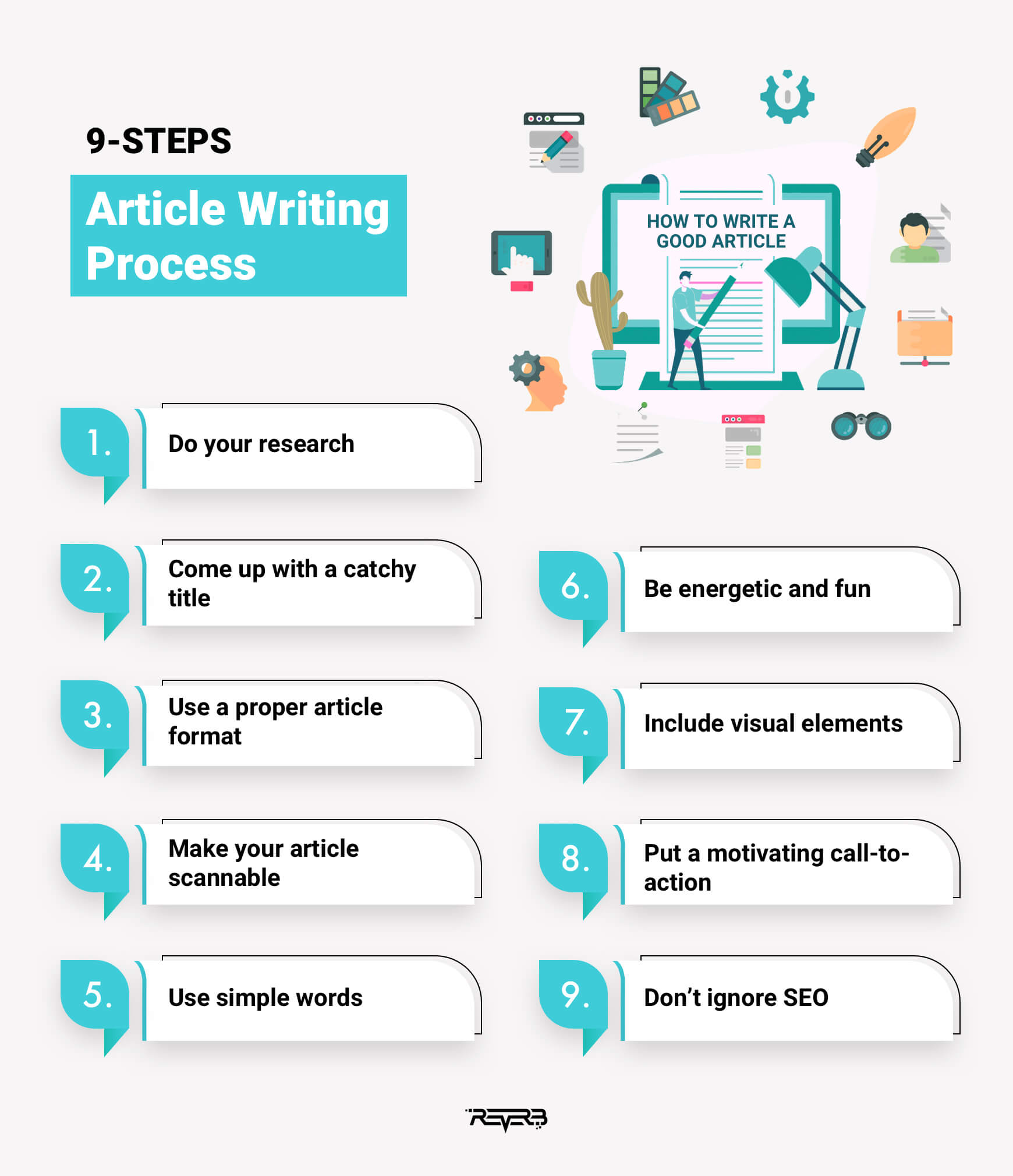
How to Write an Article That Engages and Converts: Best Practices