Mastering Blog SEO: A Step-by-Step Guide to Optimizing Your Blog for Search Engines
Welcome to the world of blog SEO, where optimizing your blog for search engines can make all the difference in driving traffic, boosting engagement, and establishing your brand as an authority in your niche. In this comprehensive tutorial, you'll learn how to SEO a blog, from keyword research to content creation, and from meta tags to link building. By the end of this guide, you'll have a clear understanding of how to optimize your blog for search engines and improve your online visibility. So, let's dive in and explore the world of blog SEO!
Step 1: Conducting Keyword Research for Blog SEO
Before you start optimizing your blog, you need to identify the keywords and phrases your target audience is searching for. This is where keyword research comes in – a crucial step in blog SEO. Use tools like Google Keyword Planner, Ahrefs, or SEMrush to find relevant keywords and phrases. For example, if you're writing a blog post about "blog SEO," you might target long-tail keywords like "how to optimize a blog for search engines" or "blog SEO tips." Remember to choose keywords with low competition and high search volume. 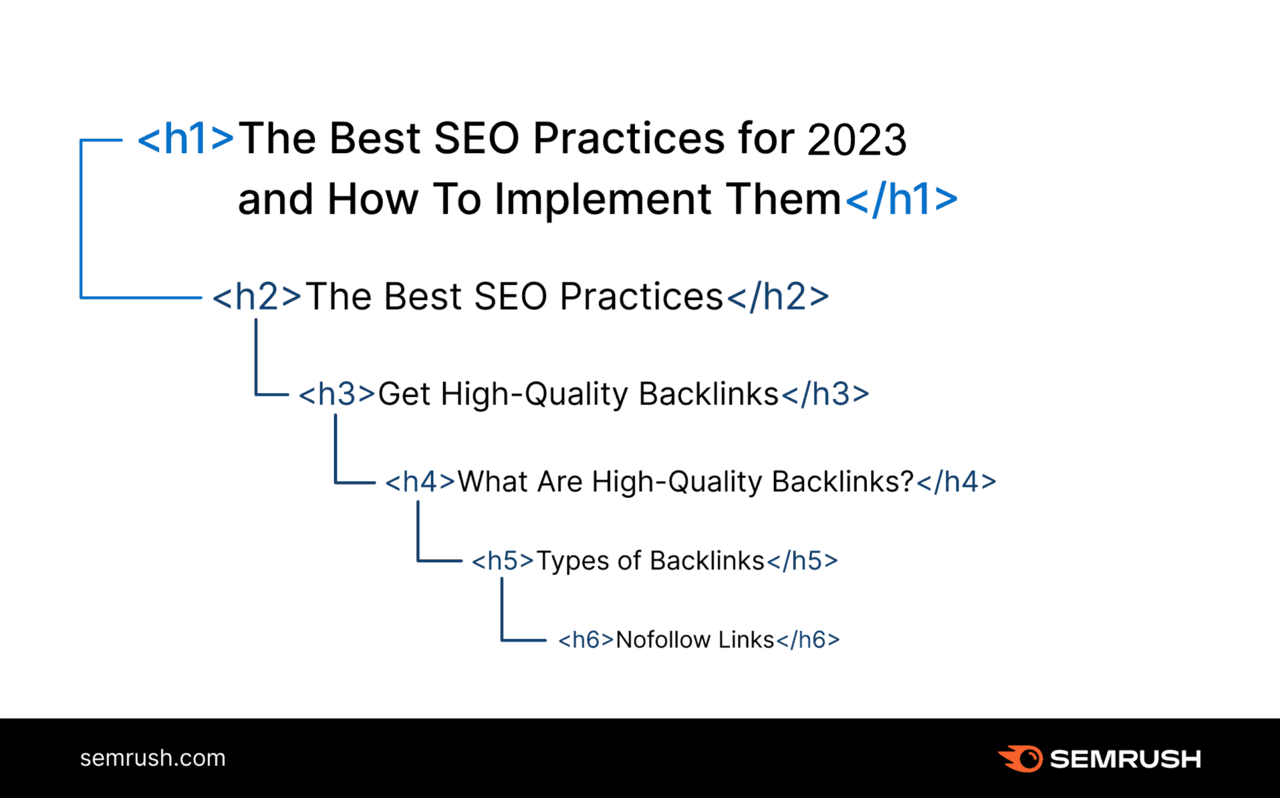
Step 2: Optimizing Blog Post Titles for Search Engines
Your blog post title is one of the most critical elements in blog SEO. It's what appears in search engine results pages (SERPs) and can make or break your click-through rate. Make sure your title is descriptive, attention-grabbing, and includes your target keyword. For example, "10 Blog SEO Tips to Boost Your Search Engine Rankings" is a great title that includes the target keyword "blog SEO" and provides value to the reader. Keep your title concise, preferably under 60 characters, and use action verbs like "boost," "increase," or "improve" to make it more compelling. 
Step 3: Writing High-Quality, SEO-Friendly Content
Content is king in blog SEO, and high-quality, engaging content is essential for driving traffic and boosting search engine rankings. Make sure your content is well-researched, informative, and provides value to your readers. Use your target keyword naturally throughout the content, but avoid keyword stuffing. Aim for a keyword density of 1-2% and use variations of your target keyword to avoid repetition. Use subheadings, bullet points, and short paragraphs to make your content scannable and easy to read. For example, if you're writing a blog post about "blog SEO tips," you might include subheadings like "Keyword Research," "On-Page Optimization," and "Link Building" to break up the content and provide a clear structure.
Step 4: Optimizing Meta Tags for Search Engines
Meta tags are HTML elements that provide search engines with information about your web page. The most critical meta tags for blog SEO are the title tag, meta description, and keyword tag. Your title tag should be the same as your blog post title, while your meta description should be a brief summary of your content, including your target keyword. The keyword tag is no longer a ranking factor, but it's still important for internal site search. Use tools like Yoast SEO or All in One SEO Pack to optimize your meta tags and make sure they're accurate and up-to-date.
Step 5: Building High-Quality Backlinks to Your Blog
Backlinks are essential for blog SEO, as they provide a vote of confidence from other websites and help search engines understand your content's relevance and authority. Build high-quality backlinks by guest blogging, participating in online communities, and creating linkable assets like infographics, eBooks, and whitepapers. Use tools like Ahrefs or SEMrush to analyze your backlink profile and identify opportunities for growth. Remember to diversify your backlinks and avoid keyword-rich anchor text to avoid penalties from search engines.
Step 6: Optimizing Images for Search Engines
Images can help break up your content, illustrate complex concepts, and provide an additional ranking factor for search engines. Optimize your images by using descriptive alt tags, file names, and captions. Use tools like TinyPNG or ImageOptim to compress your images and reduce page load times. Remember to use relevant and high-quality images that add value to your content, rather than using generic or low-quality images that can distract from your message.
Step 7: Using Internal Linking to Improve User Experience
Internal linking is critical for blog SEO, as it helps search engines understand your website's structure and content hierarchy. Use internal linking to connect related articles, provide additional resources, and help users navigate your website. Use descriptive anchor text and avoid keyword-rich anchor text to avoid penalties from search engines. Remember to use a balanced approach to internal linking, avoiding too many links per page and making sure each link provides value to the user.
Step 8: Monitoring and Analyzing Your Blog's Performance
Monitoring and analyzing your blog's performance is essential for understanding what's working and what's not. Use tools like Google Analytics or SEMrush to track your website's traffic, engagement, and conversion rates. Analyze your data to identify trends, patterns, and areas for improvement. Use this information to refine your blog SEO strategy, adjust your content calendar, and optimize your website for better performance.
Step 9: Staying Up-to-Date with the Latest Blog SEO Trends
Blog SEO is a constantly evolving field, with new trends, techniques, and best practices emerging all the time. Stay up-to-date with the latest blog SEO trends by following industry leaders, attending conferences, and participating in online communities. Use this knowledge to refine your blog SEO strategy, stay ahead of the competition, and drive more traffic to your website. Remember to focus on user experience, content quality, and relevance, as these are the core principles of blog SEO.
Step 10: Avoiding Common Blog SEO Mistakes
Avoiding common blog SEO mistakes is critical for avoiding penalties from search engines and ensuring your website's visibility. Avoid keyword stuffing, duplicate content, and low-quality backlinks. Use tools like Google Search Console or SEMrush to identify technical SEO issues, such as broken links, crawl errors, and mobile usability problems. Remember to focus on user experience, content quality, and relevance, as these are the core principles of blog SEO.
Step 11: Creating a Long-Term Blog SEO Strategy
Creating a long-term blog SEO strategy is essential for driving sustained traffic, boosting engagement, and establishing your brand as an authority in your niche. Use the steps outlined in this guide to create a comprehensive blog SEO strategy that focuses on user experience, content quality, and relevance. Remember to stay flexible, adapt to changes in the search landscape, and continually refine your strategy to ensure the best possible results.
Frequently Asked Questions (FAQs)
Q: What is blog SEO, and why is it important?
A: Blog SEO is the process of optimizing your blog for search engines to improve your website's visibility, drive traffic, and boost engagement. It's essential for establishing your brand as an authority in your niche and driving long-term growth.
Q: How long does it take to see results from blog SEO?
A: The time it takes to see results from blog SEO varies depending on your website's current state, the competitiveness of your niche, and the effectiveness of your strategy. Generally, you can expect to see improvements in 3-6 months, but significant results may take 6-12 months or more.
Q: What are the most important factors in blog SEO?
A: The most important factors in blog SEO include keyword research, on-page optimization, content quality, backlinks, and technical SEO. However, user experience, relevance, and content quality are the core principles of blog SEO, and should always be your primary focus.
Blog SEO: Tips To Optimize Your Blog Posts
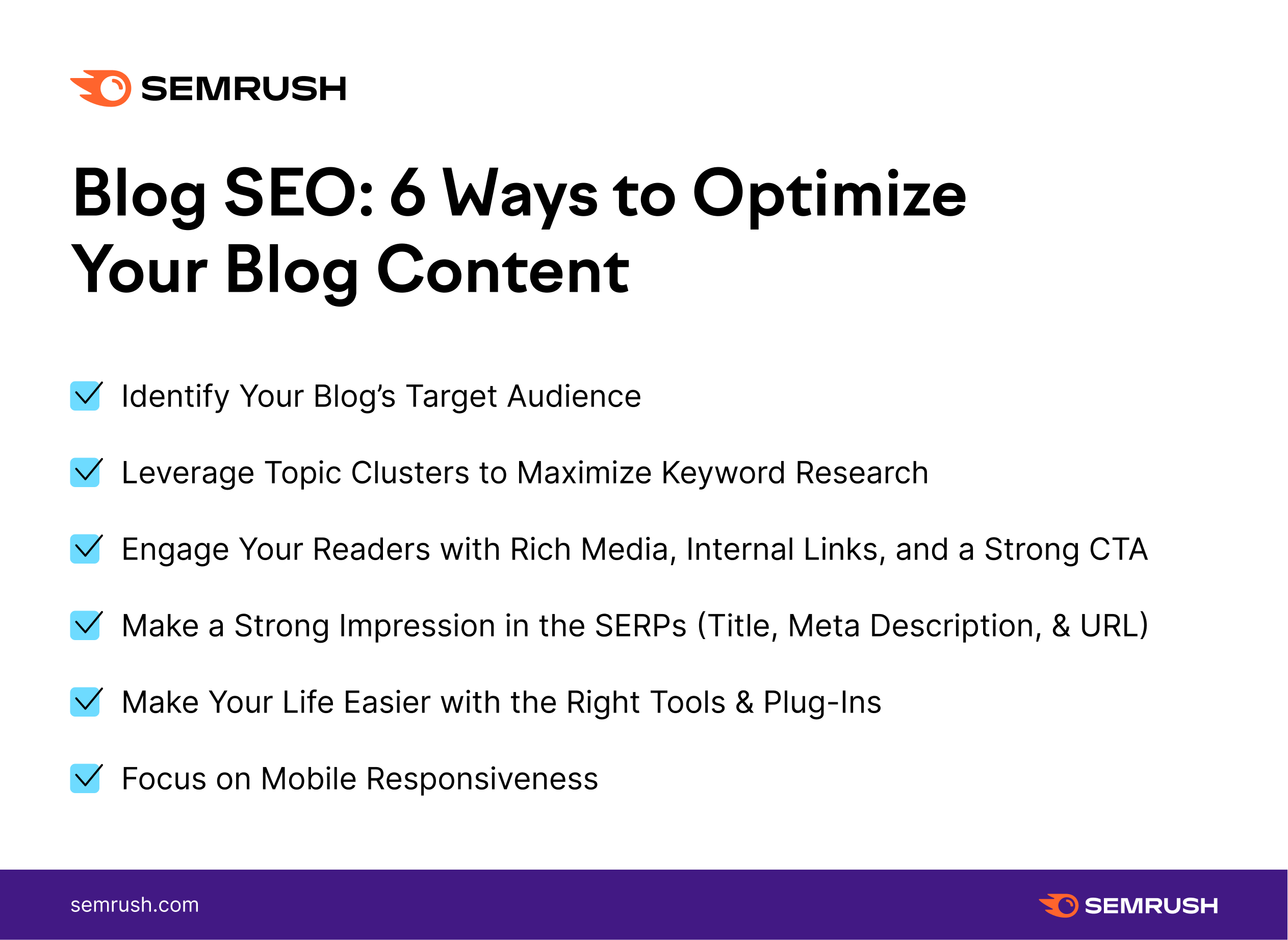
Blog SEO: Tips to Optimize Your Blog Posts
Blog SEO: How To Optimize Your Blog For Search Engines

Blog SEO: How to Optimize Your Blog for Search Engines
Blog SEO Tips Every Blogger Should Know For Higher Rankings - RankZ Blog

Blog SEO Tips Every Blogger Should Know for Higher Rankings - RankZ Blog