Developing a Consistent Writing Habit: A Beginner's Guide to Building a Daily Writing Routine
Are you struggling to establish a regular writing habit? Do you want to become a more productive and disciplined writer? In this tutorial, you'll learn how to create a writing habit that will help you achieve your writing goals. You'll discover how to set realistic goals, create a schedule, and stay motivated to write every day. By the end of this guide, you'll have the tools and techniques you need to develop a consistent writing habit that will serve you well in all your writing endeavors.
Step 1: Setting Your Writing Goals and Creating a Schedule
To start building your writing habit, you need to set clear and achievable goals. What do you want to accomplish with your writing? Do you want to write a novel, a blog, or simply maintain a journal? Once you have a clear idea of what you want to achieve, you can create a schedule that works for you. Start by committing to write for a certain amount of time each day, say 30 minutes or an hour. Choose a specific time of day that works best for you, and stick to it. For example, you can wake up early and write before the rest of your household wakes up, or you can write during your lunch break.

Step 2: Choosing Your Writing Tools and Environment
The next step is to choose the right writing tools and environment that will help you stay focused and productive. Do you prefer writing on a computer, tablet, or smartphone? Do you like writing in a quiet room or in a bustling coffee shop? Experiment with different tools and environments until you find what works best for you. Consider investing in a good writing app, such as Scrivener or Ulysses, that will help you organize your writing and stay on track. You should also consider creating a dedicated writing space that is free from distractions and interruptions.

Step 3: Developing a Pre-Writing Routine
Having a pre-writing routine can help you get into the right mindset and prepare you for writing. This can be as simple as making a cup of coffee or tea, or doing some light stretching exercises. You can also listen to music or nature sounds that help you relax and focus. The key is to create a routine that signals to your brain that it's time to write. For example, you can start by freewriting for 10-15 minutes to loosen up your writing muscles and get your creative juices flowing.

Step 4: Overcoming Writer's Block and Staying Motivated
One of the biggest challenges to building a writing habit is overcoming writer's block and staying motivated. There will be days when you don't feel like writing, or when the words just won't come. To overcome this, you need to have a strategy in place. One technique is to break your writing into smaller, manageable tasks. Instead of trying to write a whole chapter, focus on writing a single scene or paragraph. You can also reward yourself for reaching certain milestones, such as completing a certain number of words or finishing a difficult scene.

Step 5: Reviewing and Revising Your Writing
Finally, it's essential to review and revise your writing on a regular basis. This will help you track your progress, identify areas for improvement, and refine your writing skills. Set aside time each week to review what you've written, and make revisions as needed. Don't be too hard on yourself, though - the goal is to make progress, not to create a perfect piece of writing. You can also join a writing group or find a writing buddy to get feedback and support.

Frequently Asked Questions
Q: How long does it take to build a writing habit?
A: It can take anywhere from 30 days to 6 months to build a consistent writing habit, depending on your schedule and commitment.
Q: What if I don't feel like writing some days?
A: It's normal to have off days, but the key is to show up and write anyway. Even if it's just for a few minutes, the act of writing will help you stay on track and build momentum.
Q: Can I write at any time of day?
A: Yes, you can write at any time of day that works for you. The most important thing is to find a time that you can commit to and stick to it.
Building A Regular Writing Habit | PDF
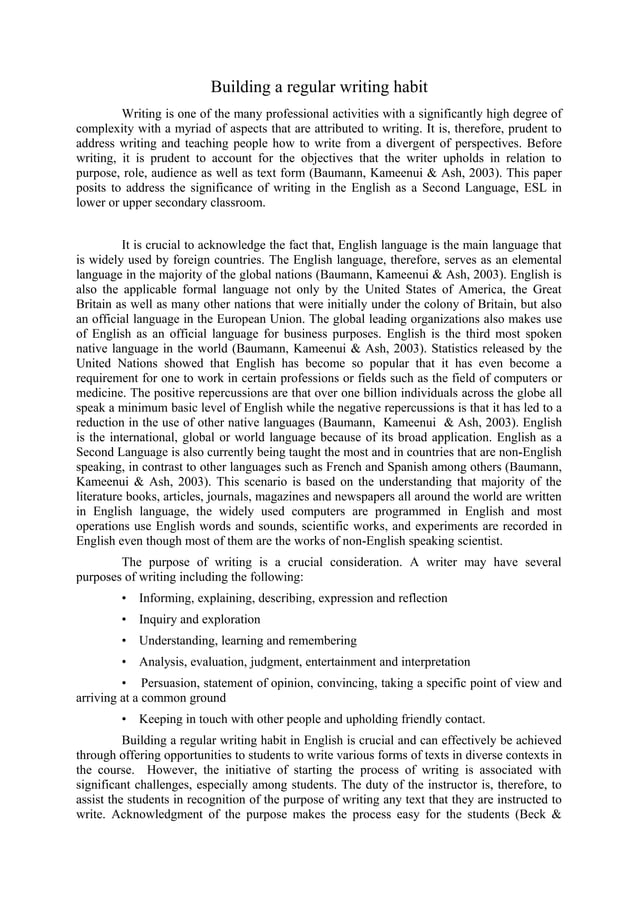
Building a regular writing habit | PDF
The Benefits Of A Regular Writing Habit - Changing Pages

The Benefits of a Regular Writing Habit - Changing Pages
Developing A Writing Habit (the Easy Way) - Love.Writing.Life

Developing a writing habit (the easy way) - Love.Writing.Life